Scaling privacy in the age of AI, with OpenAI’s Idriss Kechida
3 min read

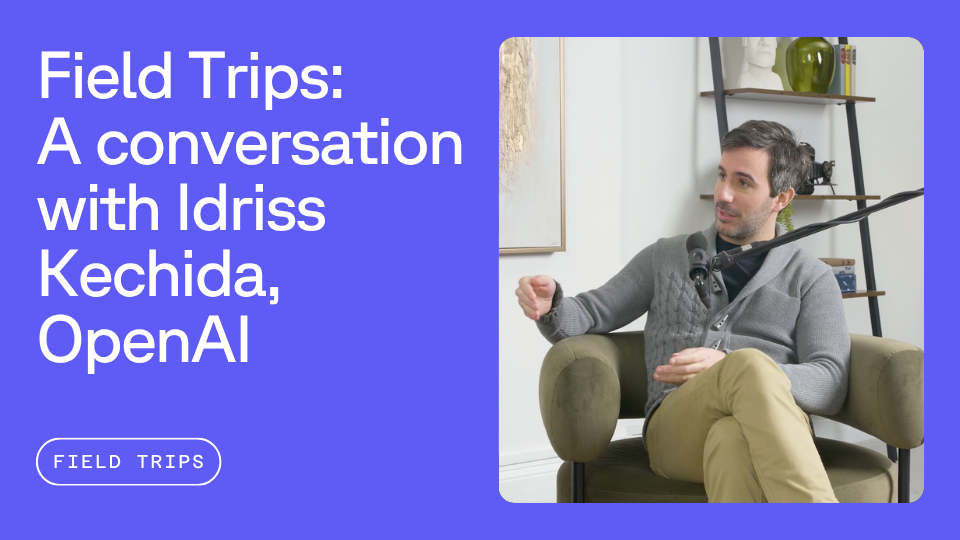
I recently sat down with Idriss Kechida, Global Data Protection Officer at OpenAI, for the latest episode of Field Trips to talk about what it really takes to build privacy programs that work at enterprise scale. You can watch the full episode below, but here are a few moments from our conversation that stayed with me.
What stood out immediately in my conversation with Idriss is that he doesn’t treat privacy as a standalone function. He treats it as an operating discipline, one that only works when it’s embedded into how the business actually runs.
That perspective is increasingly critical as privacy leaders find themselves working not just with Legal, but alongside security, data, product, and digital leadership.
“You shouldn't stay in your lane,” Kechida told me. “Privacy is absolutely a company-wide issue... You're a translator, and you're sort of a coalition builder.”

Regulation is the "easy" part
One of the most refreshing things Kechida shared was his perspective on the skills that matter most for modern privacy professionals. While many worry about keeping up with the growing volume of new laws, Kechida argues that technical curiosity is the real differentiator.
“I think regulation is the easiest piece,” Kechida told me. “I used to say that... if I were to give someone 500 pages to read... across two days, they would know 75% of what I know.”
Instead of memorization, he looks for people who can bridge the gap between principle and practice.
“What you want to have are people who are smart and can understand how to apply principles to new technology,” he said, “without thinking that you will find the answer in a manual.”
On the “Village” approach to AI
As organizations push deeper into AI, the conversation inevitably turns to how we govern it. Kechida was clear that this isn’t a job for one company or one regulator alone; it requires a collective effort.
“I do believe that it takes a village for us all,” he explained. “As a society, to look at this new technology, look at what it can bring and try to think through what is the best way for us to accommodate, to enable that technology in a way that makes sense, that will enhance people's rights.”
Why AI gives me hope
Despite the scrutiny and the complexity of the landscape, Kechida remains optimistic about the direction of the technology. His view isn’t that AI opposes privacy, but that it can ultimately strengthen it.
“I do strongly, absolutely believe that AI will enhance privacy, and that really makes me hopeful,” he said. “It’s just giving people more agency rather than removing agency.”
Final thoughts
What I appreciated most about my conversation with Kechida is how grounded it was in the reality of building for the future. It’s messy, and it’s fast, but the engagement from the community is what drives progress.
As Kechida put it, “People are super interested in this. And that’s great because it will take everyone’s kind of brain power and genuine engagement for us all to get there.”
You can also watch the interview directly on YouTube


By Ron De Jesus
January 22, 2026