Autopilot assessment reporting: Introducing triggers and added functionality
4 min read

Introducing Assessment Triggers and expanded assessment functionality
Compliance reporting is integral to a healthy privacy program, requiring a level of accuracy and defensibility against an abundance of constantly changing variables that manual, point-in-time surveys can’t provide. This is why teams need platforms that automate and sharpen reporting workflows.
That need has only become more pressing in 2026 and beyond, as the California Privacy Rights Act (CPRA) now requires organizations processing personal data that presents a “significant risk” to consumer privacy to conduct risk assessments before any processing can begin.
While organizations have until April 1, 2028 to submit these assessment reports to CalPrivacy (the governing body that enforces CPRA) they need to put together yearly reports for 2026 and 2027. What’s more, a relevant member of an organization’s executive team must sign an attestation as to the veracity of the report, bringing personal liability into the picture.
Transcend Assessments now includes updated functionality to help enterprises and legal teams comply with these new requirements without adding headcount or accepting risk. We’ve launched Assessment Triggers and new functionality that syncs rows from assessments directly to the data inventory. These capabilities further transform assessments into living records that update automatically and provide a comprehensive snapshot of privacy risk management within an organization.
Assessment Triggers: Smarter assessments that run themselves
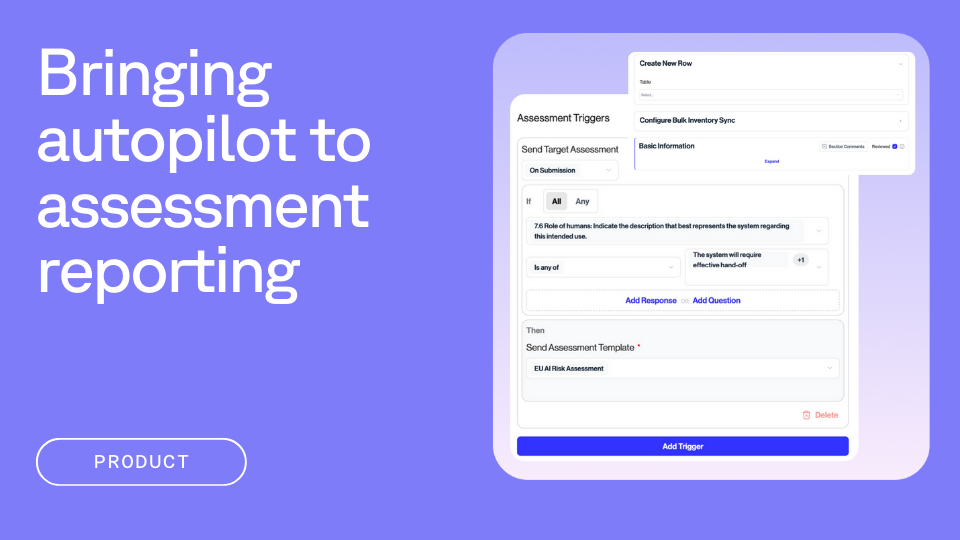
With Assessment Triggers, privacy teams can now automatically launch follow-up assessments — such as Privacy Impact Assessments, Data Protection Impact Assessments, or Transfer Impact Assessments — based on responses to specified questions.
Instead of relying on a high-level risk score or forcing everything into a lengthy form, Assessment Triggers operate at the question level.
For example, a simple threshold assessment can ask whether personal data will be shared with a vendor, transferred internationally, or used for automated decision-making. If the answer is yes, the system can immediately trigger the right downstream assessment to the right people — including legal, security, or even external vendors — without the need for manual intervention.
Whether choosing to run triggers on assessment submissions or approval, teams now have the flexibility to run a traditionally laborious task on autopilot. Instead of constantly managing and sending out surveys by hand or inside of limited legacy solutions, legal teams can rest easier knowing that surveys are initiated when needed, directed to the right place, and managed without constant oversight.
Triggers build on top of Transcend’s industry-best existing assessment logic, which allows teams to capture the nuance of modern data privacy operations and minimize human-error that is introduced with manually reviewing and sending out follow-up assessments.
Unlike traditional tools that stack every follow-up question into one overwhelming screen, Transcend’s approach keeps assessments modular while preserving context. Relevant responses from earlier assessments flow forward into the next, so reviewers get full visibility without the clutter.
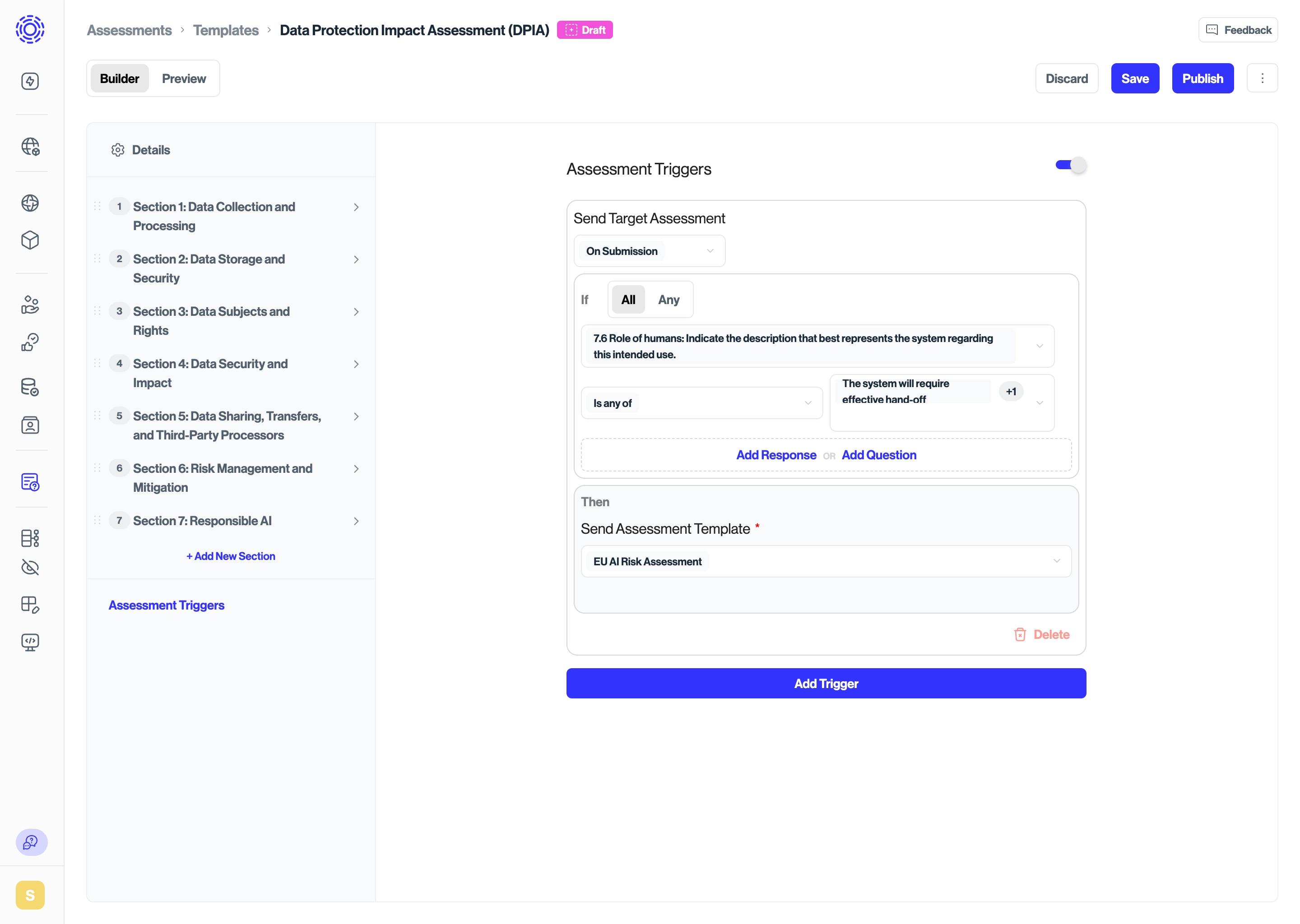
Even more importantly, legal teams can apply assessment logic to every question, not just a limited set, to create nuanced rules for when questions appear, when assessments trigger, and who gets notified.
This approach ensures risk will not get understated or buried in forms, but instead routed to the people who can actually act on it.
Connecting Assessment outputs to your Data Inventory
The platform update to support syncing of new rows from assessments to the data inventory also closes a critical gap by keeping assessments and data inventories aligned automatically to further drive efficiency for compliance teams and minimize user input-error. This added flexibility and oversight let teams run day-to-day privacy operations on autopilot and focus on the bigger picture.
Meta data collected during assessments now automatically populates data inventories, reducing time-consuming steps users previously had to take to input changes by hand. When a new system, vendor, or use case appears or is approved, that data flows directly to the data inventory.
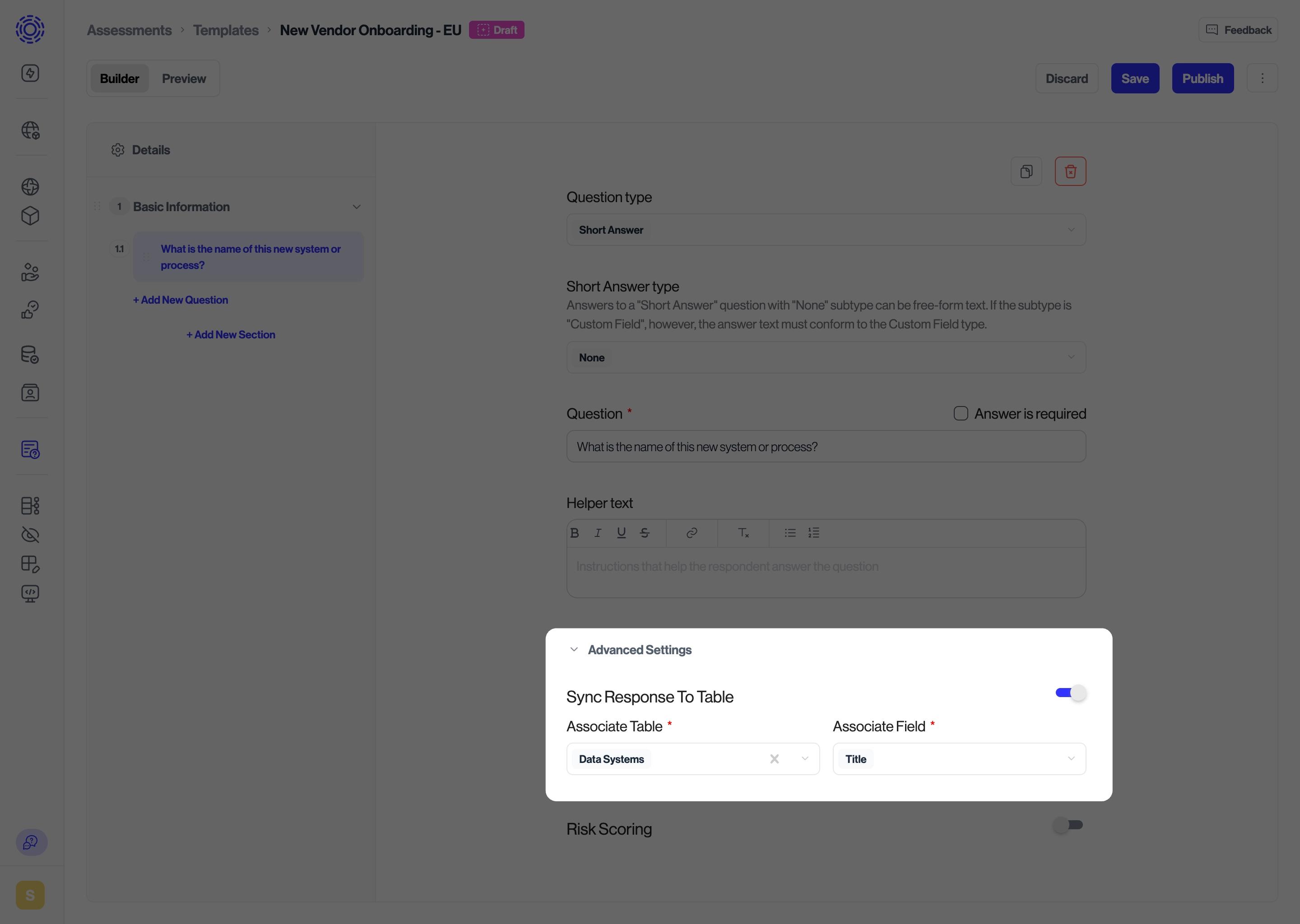
This creates stronger compliance practices, as assessments inform the inventory and the inventory improves the accuracy of future assessments, all culminating in a holistic look at data across business, vendors, and processes.
Given the vast quantity of data systems and data flows organizations use today, as well as the importance of properly vetting third-party vendors, automating Data Inventory upkeep directly from assessments will keep both an organization’s compliance reporting and data visibility current and comprehensive without needing any extra work from resource-strapped compliance teams. Doing so will also help improve cross-functionality collaboration internally and with third parties.
Built for today’s regulatory reality
Together, these updates to Transcend Assessments represent a fundamental shift in how privacy programs operate. Instead of relying on error-prone manual data-entry follow-up and disconnected records, organizations can run a variety of assessments as part of a continuously updating and accountable system of record.
Risk is identified the moment it appears, routed to the right stakeholders automatically, and reflected immediately in the data inventory that underpins compliance reporting. That matters more than ever as regulators move from abstract requirements to real accountability, leaving organizations in need of infrastructure that ensures every assessment is complete, traceable, and defensible by design.
In an era where compliance is no longer a quarterly exercise but a daily reality, these features ensure that privacy governance keeps pace with how data is actually used.

Interested in seeing how easy the updates make assessment reporting? Book a demo.
Contact us