Exclusive report: The hidden force behind every stalled AI initiative
3 min read

The following is an excerpt from ‘The 2026 CIO customer data readiness report: Why enterprise AI initiatives stall and what enterprise leaders can do to close the gap’.
Commissioned in partnership with UserEvidence, the report draws on a survey of more than 220 senior IT leaders at global enterprises with over 5,000 employees. It explores why enterprise AI initiatives stall, identifies three structural root causes, and outlines a practical roadmap for CIOs and data leaders to close the data readiness gap.
Download the full report here.
Executive summary
For enterprises striving to stay ahead in competitive markets, AI is now a strategic imperative. Budgets are committed, pilots are launched, and executive expectations are high. And yet, for most enterprises, the real-world results tell a different story: initiatives stall, timelines stretch, and the promised ROI has yet to materialize.
81% of enterprises have had to delay, scale back, or abandon one or more strategic AI initiatives in the past twelve months. These aren't fringe projects or experimental pilots. They're revenue-accelerating initiatives like AI-driven marketing, personalization, and customer analytics: exactly the kind of work that justifies expanded investment.
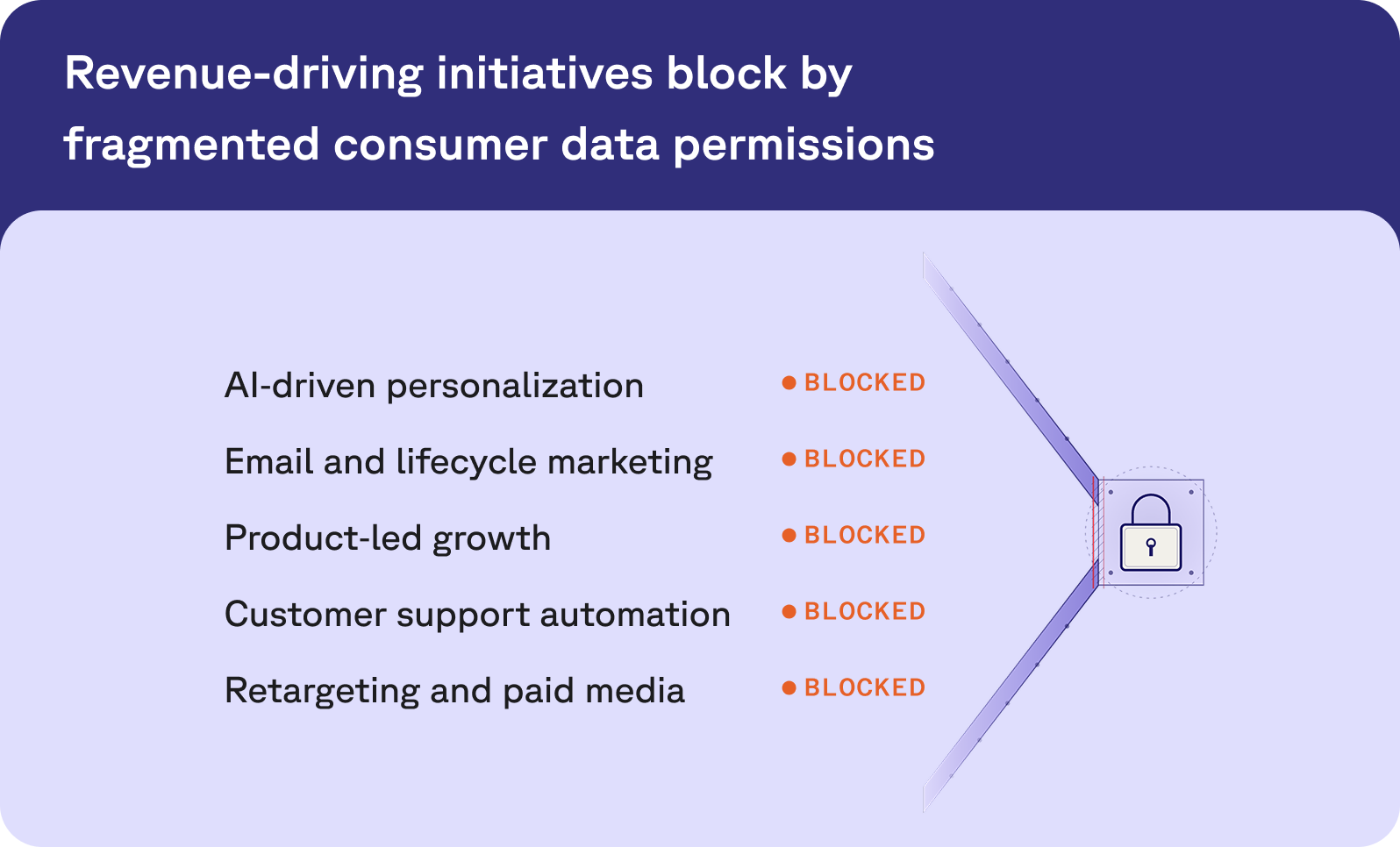
Looking only at the surface-level, it’s easy to blame the technology for these setbacks. But as the data here will make clear, AI models aren’t the issue. Look a level deeper and the real culprit emerges: fragmented and unclear customer data permissions.
Enterprises are attempting to scale AI on a customer data foundation that simply isn't ready. In fact:
93% of respondents reported that data permission or governance issues surfaced at some point during the AI project lifecycle.
Not only that, but 85% of enterprises reported they lacked at least one of the four foundational capabilities required for responsible AI data activation.
This report examines why the AI-readiness gap persists and where the risks are greatest. More importantly, it offers a clear path forward. For CIOs and IT leaders, the stakes are high: enterprises that resolve their data permission and governance challenges now will be positioned to scale AI with speed and confidence. Those that don't risk watching their AI investments stall, while competitors who got their data foundations right pull ahead.

Learn why 81% of enterprises have delayed, scaled back, or abandoned at least one AI initiative in the past 12 months.
Download the full reportThe cost of stalled AI: Where enterprise initiatives fail and why
The data makes it clear that AI project failures aren't the exception, they're the norm. 81% of enterprises have delayed, scaled back, or abandoned at least one AI initiative in the past 12 months, and the average enterprise had three stalled projects in that same period.
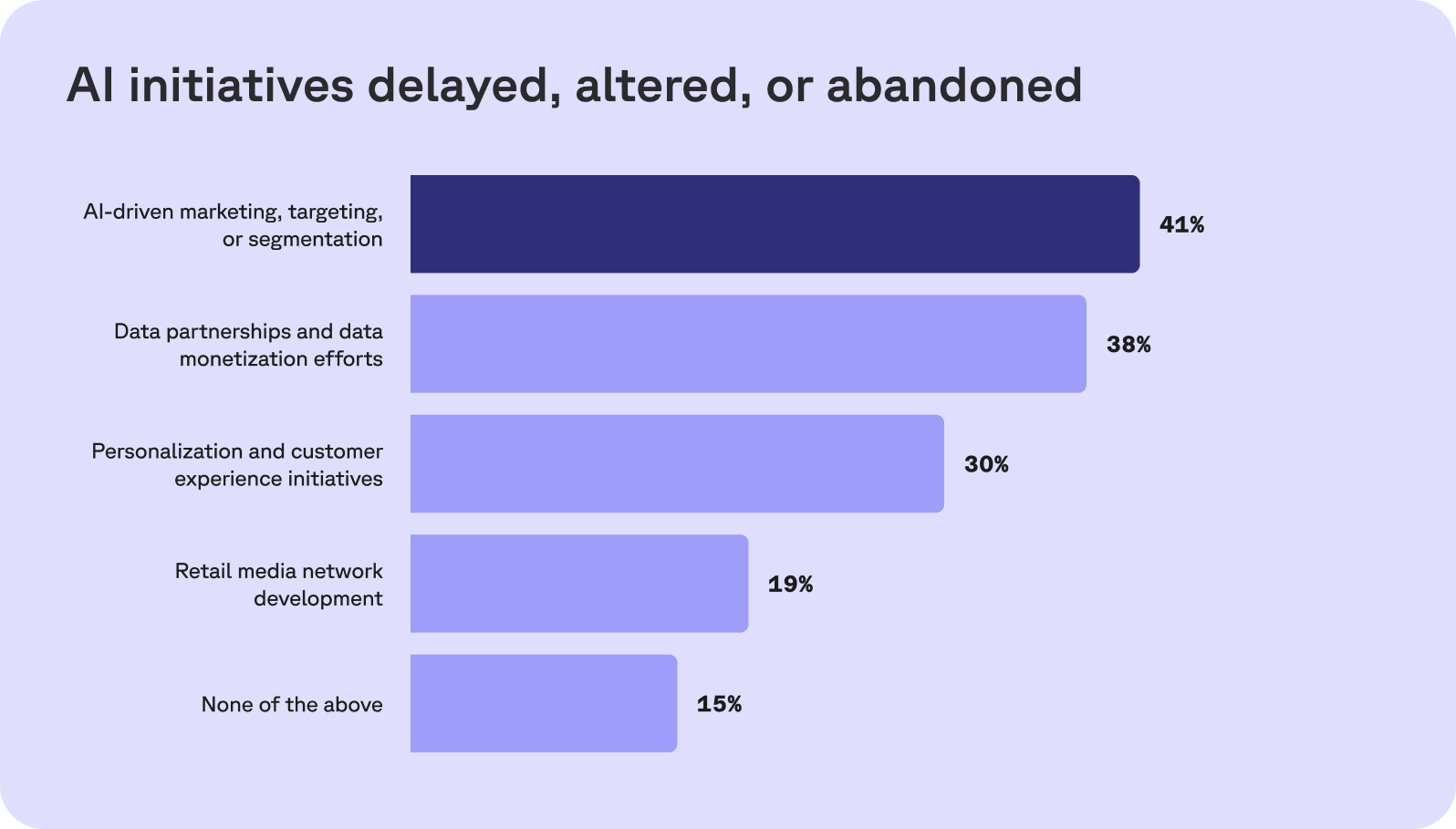
However, it’s the types of initiatives being delayed that reveal where the AI data readiness gap hits hardest.
AI-driven marketing, targeting, and segmentation (41%) top the list, followed by data partnerships and data monetization efforts (38%), personalization and customer experience initiatives (30%), and retail media network development (19%). For enterprises in competitive markets, these aren't nice-to-have projects. They drive critical revenue growth, and the margin for error is shrinking.
The stakes are clear. Boston Consulting Group (BCG) projects that:
$2 trillion in revenue will redistribute over the next five years: shifting to those brands that deliver personalized customer experiences at scale and flowing away from those that don’t.
McKinsey research puts the average revenue lift from personalization at 10–15%, with some sectors seeing up to 25%. Google and BCG found that marketers using first-party data across key marketing functions achieve up to 2.9x revenue uplift compared to those who don't, plus a 1.5x increase in cost savings.
Enterprises see the opportunity and most are already investing in it. But the returns aren't materializing the way the research suggests they should and when leaders are asked why, the answers point in one direction: insufficient data quality or availability (40%), inconsistent governance across tools, regions, and brands (36%), and limited visibility into how data can be used across platforms (31%).
The data and the ambition is there. What's missing is a permission and governance layer that gives teams the confidence to act on customer data at the speed AI requires. Without it, the initiatives enterprises are betting on get stuck waiting for governance to catch up: personalization underperforms, AI deployments that should be live are stuck waiting on approvals, and data that could be driving revenue sits unused.
Download the full report to understand why your AI initiatives are stalling, plus concrete steps you can take to get back on track.